Catholic Wedding Photography Rules for a Toronto Church Wedding
Photographing a Catholic Church Wedding in North York
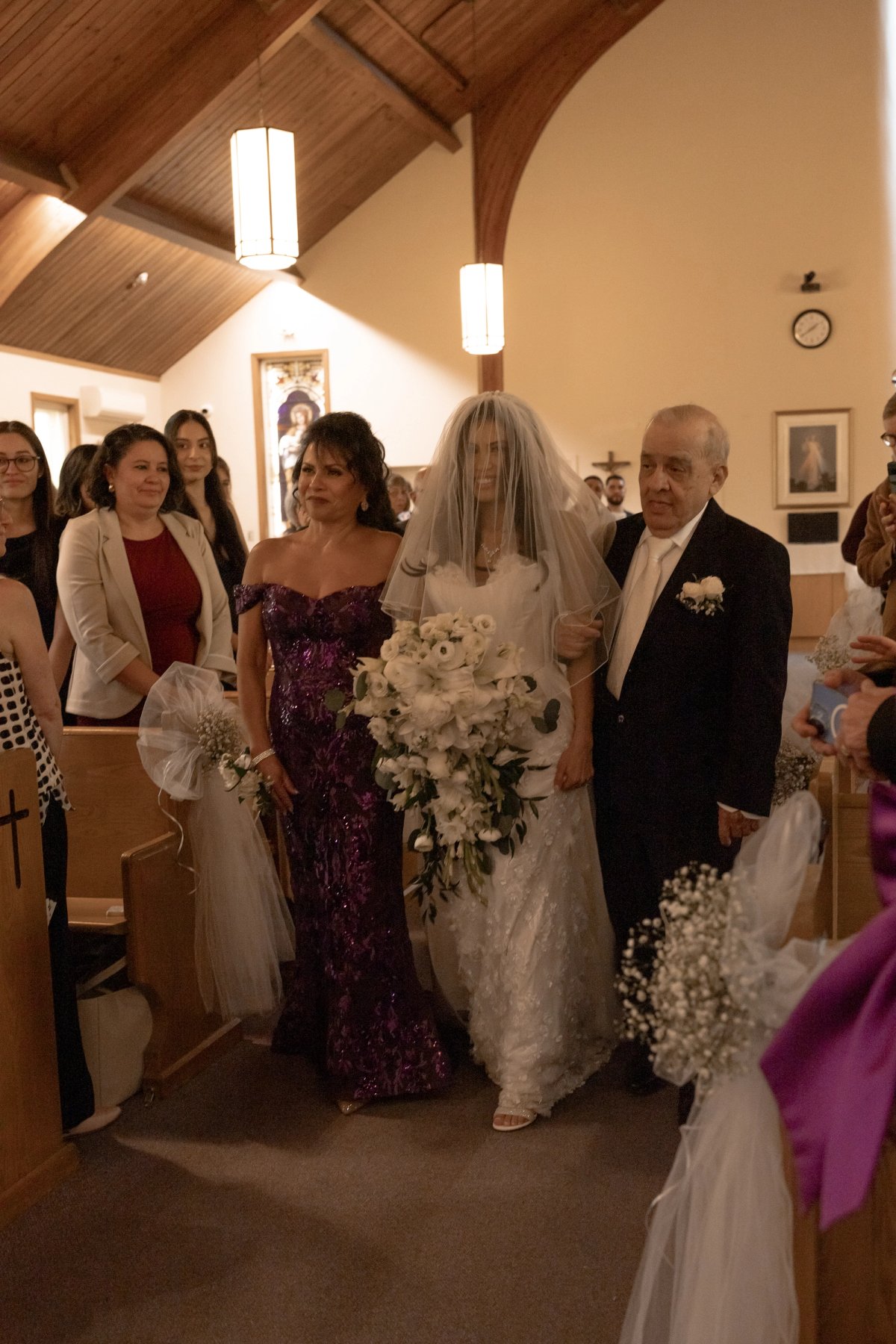
There is something quietly profound about walking into a Catholic church on a wedding morning. The floor still holds the coolness of the night, candles flicker near statues of saints, and someone is tuning an organ at the front. Earlier this year I photographed a wedding at a Catholic parish in North York, and the atmosphere was completely different from most of the event spaces or winery celebrations I regularly photograph around Southern Ontario. The sanctuary was already set with an altar cloth and open hymnals. Family members moved quietly up and down the aisles, finding their way to their seats. When the bride arrived, she smiled to her mother and linked arms with her grandfather as they began to walk her down the aisle. My heart beat a little faster because I knew we were about to witness a special moment.
At Catholic weddings the ceremony is not simply a piece of the day, it is a sacrament. That means the rules around photography are different too. Couples often ask me what they should expect when they plan a Catholic church wedding in Toronto or North York, and this blog is my attempt to answer that question. I’ll share what I learned from the guidelines provided by the parish where I photographed this wedding, explain why churches have these rules, and offer tips for planning your timeline so that your ceremony and photographs both feel relaxed and respectful.
Why Catholic Wedding Photography Rules Matter
Catholic churches treat the wedding ceremony as a sacred liturgy. Unlike civil ceremonies or outdoor vows, a Catholic wedding is celebrated within the context of a Mass or liturgy of the Word. Many parishes insist that photographers speak with the priest before the ceremony to review the guidelines. These guidelines are not there to frustrate anyone; they exist to keep the focus on the sacrament and to respect the sacred space. Being prepared ahead of time is the simplest way to avoid surprises on the wedding day.
One important point is that rules can vary widely from parish to parish. Some churches allow flash during the processional or recessional, while others forbid artificial lighting entirely. Certain parishes ask photographers to remain at the back or side aisles, while others allow movement along the side aisles as long as the photographer is discreet. Because there is no single “Catholic church photography rule,” couples should always confirm policies with their own priest or wedding coordinator before the big day.
Common Catholic Church Wedding Photography Rules
While each parish sets its own policies, several common guidelines appear again and again in the documents I’ve reviewed.
1. Talk to the priest before the ceremony
Most parishes ask photographers to check in with the priest upon arrival so he can review the church’s policies. At the North York parish I recently visited, the church provided a sheet of photography rules and asked that we speak with the priest at least ten minutes before the ceremony to confirm where we could stand and when we could use flash. This short conversation helps everyone feel comfortable and ensures the photographer understands what will and will not be allowed.
2. No flash or limited flash
Flash photography and extra lighting can be distracting during a liturgy. Several churches specify that flash is permitted only during specific moments—usually the entrance procession, the exchange of rings or signing of the register, and the final procession. The guideline sheet from my North York wedding mirrored these rules: extra lighting was allowed for the entrance procession, the signing of the register and the recessional, but not during the prayers or homily. At St Stephen Catholic Church in Michigan, their guidelines state that flash photography or video lighting is not permitted during the liturgy. If your church is very dark, speak with your priest about whether you may use flash during the processional and recessional.
3. Stay out of the sanctuary
The sanctuary is the elevated area where the altar, pulpit and priest’s chair are located. Many parishes instruct photographers to remain outside of this area. Some churches note that photographers may not enter the sanctuary and should stay to the side or the choir loft. Some also advise photographers never to go past the first row of pews or step onto the altar step while others have guidelines that prohibit photographers from entering the baptistry, altar or music area, confining all equipment to the nave of the church. In practice this means you can work from the back and sides of the church but should never stand between the couple and the altar during the vows.
4. Respectful movement
Most churches allow movement along the side aisles, provided the photographer remains unobtrusive. When the congregation is kneeling, photographers should stay still and avoid drawing attention. Some churches will remind photographers to move in a respectful manner and to stay out of restricted areas. During the wedding I photographed in North York, I spent most of the ceremony stationed near the side aisle with a long lens or at the back. I only moved quietly when necessary, and I made sure to stand still during moments of prayer.
5. No posed photos during the liturgy
Many parishes prohibit posed photos inside the church before or after the ceremony. There are churches that will explicitly state that posed pictures are not allowed inside the church because it helps preserve the dignity of the space. f your church forbids posed photos, plan to take family portraits outside or in another location. Some parishes allow brief group photos at the altar immediately after the ceremony; confirm with your priest.
6. Dress appropriately
Churches expect vendors to dress respectfully. Catholic weddings are formal and the church is a sacred place, so appropriate attire is essential.The guideline sheet from North York also emphasised appropriate clothing. Think business casual or darker tones; avoid jeans, sneakers or anything revealing.
7. Video cameras must remain stationary
If you are hiring a videographer, ask your church about their rules. Some guidelines require video cameras to remain stationary on tripods and not to block aisles or movement. Others allow a videographer to set up in designated stations and asks them not to use artificial lighting. The North York church sheet stated that video cameras should be set up on a tripod to the left of the main altar and that artificial lighting was forbidden except during the processions.
What Couples Should Ask Their Church Before the Wedding
When you first meet with your priest or parish coordinator, bring a list of questions so you can plan your timeline and photography expectations. Here are some questions I recommend asking:
- Where can the photographer stand during the ceremony? Find out whether they must stay in the back pews, may move along the side aisles, or are allowed to use the choir loft.
- Is flash allowed? Ask if there are specific moments when flash or extra lighting is permitted (such as the processional, exchange of rings, signing of the register and recessional).
- Can photos be taken during communion and kneeling? Some churches allow photos from the back without flash; others may ask photographers to stop shooting during communion or kneeling.
- If posed photos are not allowed inside the church, plan to take them elsewhere. Ask how long you have after the ceremony before another Mass or event begins.
- Are there restrictions on videography? Confirm whether video cameras must remain stationary and whether artificial lights are allowed.
- What time should the photographer arrive? Most churches want the photographer to arrive early to speak with the priest and set up unobtrusively.
A Real Example of Catholic Church Photography Guidelines
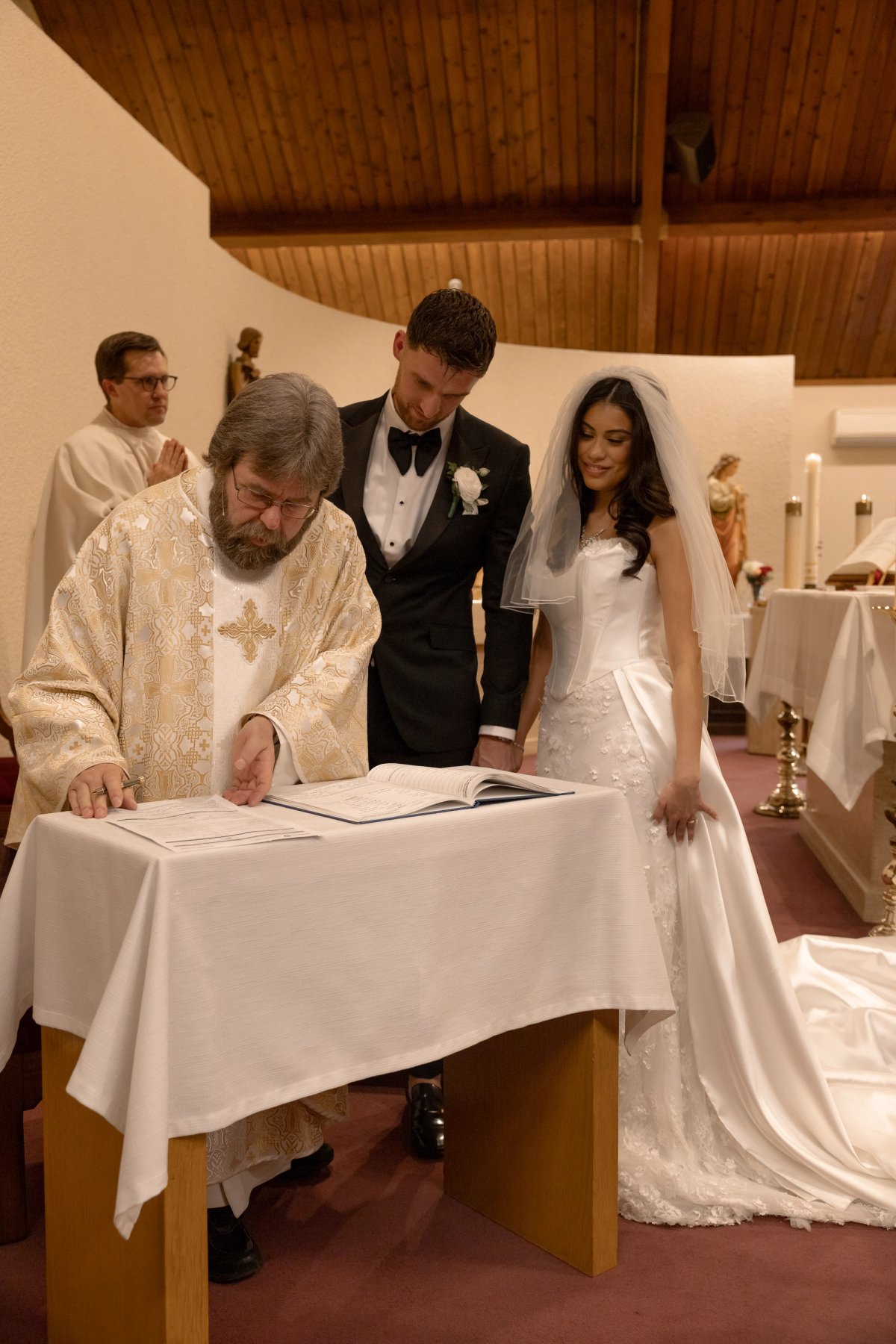
The North York parish where I photographed my recent wedding provided a detailed photography guideline sheet ahead of time. It closely mirrored many of the rules discussed above. The sheet asked photographers and videographers to meet with the priest at least ten minutes before the ceremony. All extra lighting, whether handheld or stationary, was allowed only during the entrance procession, signing of the register and final procession. We were instructed not to set up equipment in the church without consulting the priest and to stay off the sanctuary steps except during the signing of the register. The sheet limited still photography to four moments: the entrance procession, the exchange of rings (but not the vows), the signing of the register and the recessional. It also noted that photographs could be taken from the back of the church without flash at any time, but we were asked to remain still when the congregation was kneeling.
For video, the guidelines directed them to place their tripod to the left of the main altar, outside the sanctuary area, and forbade artificial lighting except during the processions. The sheet concluded by warning that any photographer who ignored the guidelines could be asked to leave. This document was incredibly helpful because it clarified expectations and allowed me to plan ahead. My couple shared the guidelines with me before the wedding, so there were no surprises on the day on either end.
Photographing a Catholic Church Wedding in North York/Toronto
Being a documentary wedding photographer, my style is rooted in observation rather than orchestration. In North York I arrived early, greeted the priest, and took a moment to stand in the empty nave. I listened to the cantor rehearse and watched the groom greet family members. The ceremony itself had a steady rhythm: the processional, readings, homily, vows, exchange of rings, communion, and recessional. Each part offered its own photographic opportunities.
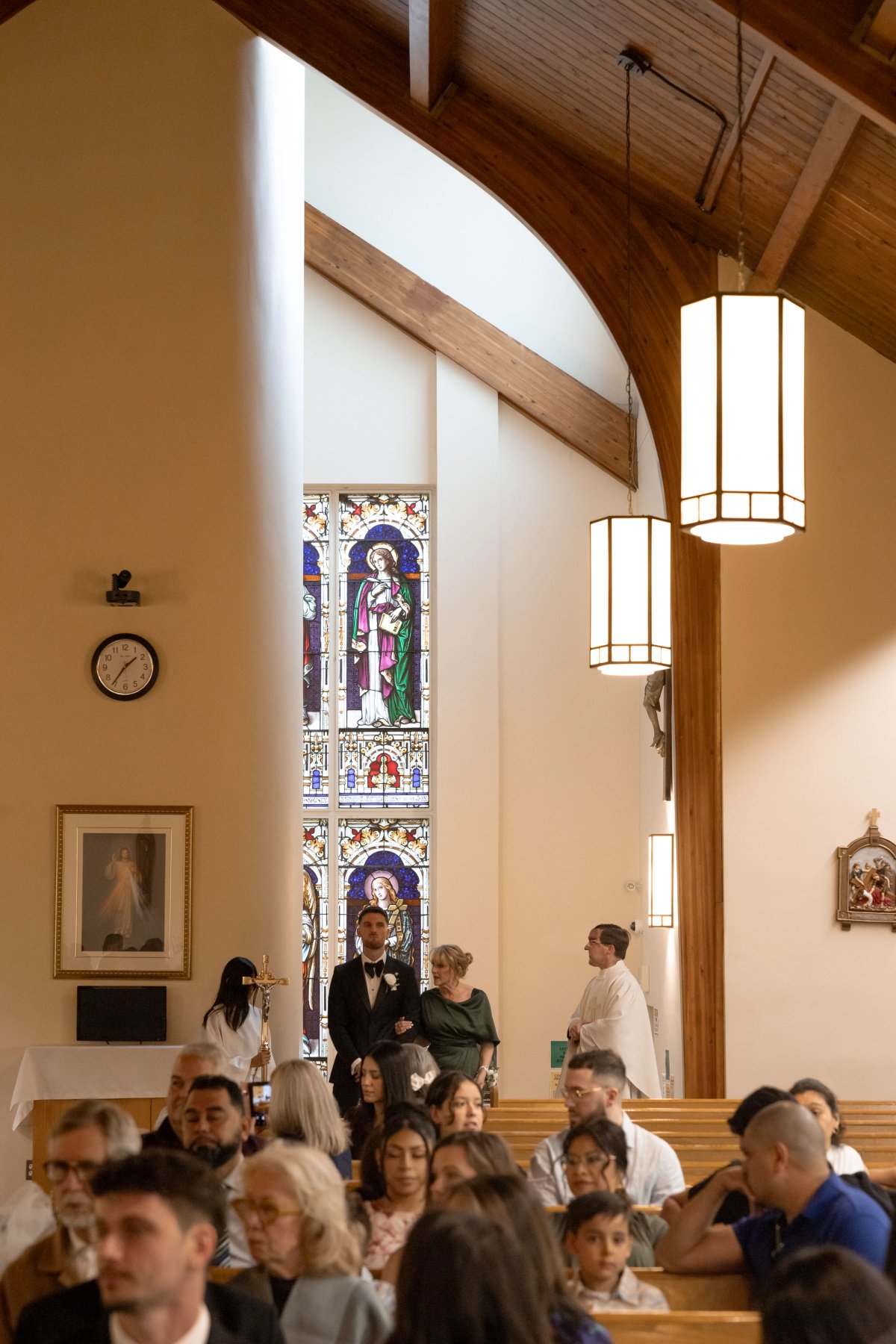
When the congregation sat for the readings, I moved quietly to photograph the family as they listened. The homily was moving and had everyone smiling; I captured the couple’s reactions and the priest’s gestures. During the processional I stood near the side aisle and used a long lens to capture the bride’s entrance without blocking anyone’s view.
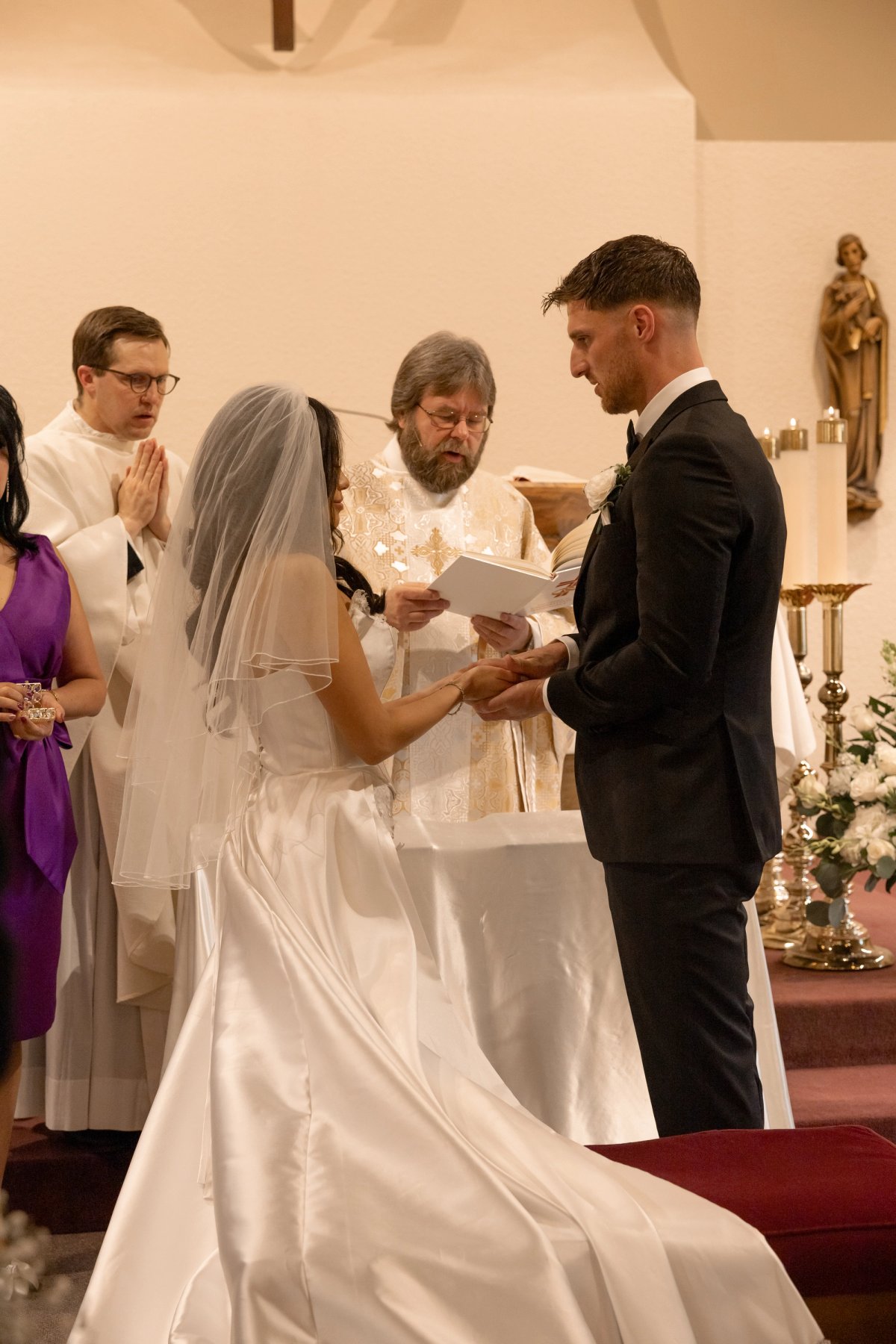
For the vows and exchange of rings I stayed to the side of the sanctuary. The priest allowed me to step a bit closer during the ring exchange, and I used a silent shutter to avoid drawing attention. I did not photograph the vows themselves because the guidelines asked that we refrain during that moment. When the congregation knelt for communion, I remained still and photographed from the side of the church without flash. After the final blessing, I captured the recessional as the couple walked down the aisle, then followed them to the church basement for an intimate reception.
The result was a set of images that feel quiet and sincere. You can see the architecture of the church, the proud look on the groom's face as his bride walked the aisle, the way the bride held her mother and grandfather’s arms during the entrance. These are the kinds of moments that matter to me as a documentary photographer.
Why Documentary Photography Works Well for Catholic Weddings
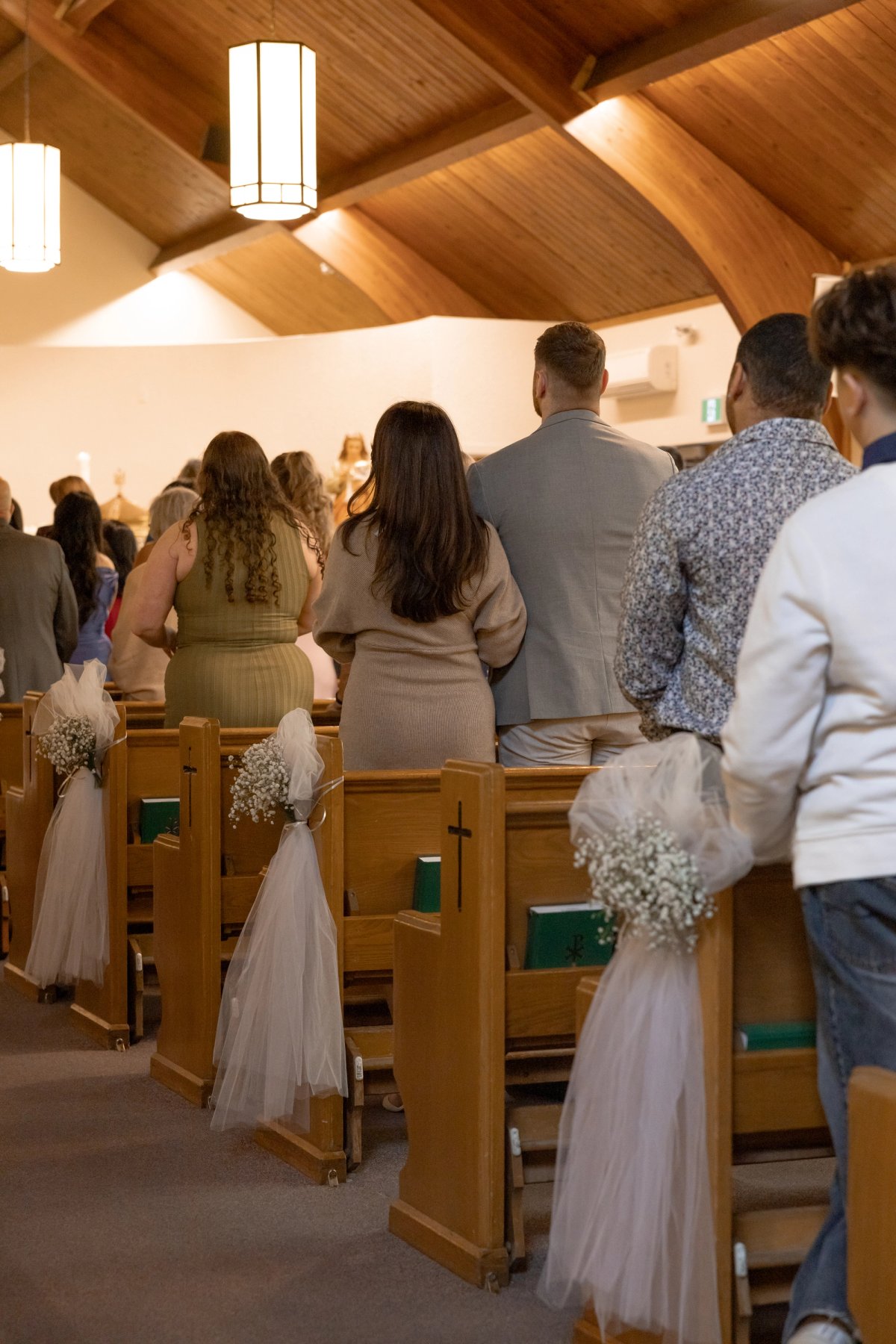
A documentary approach is particularly well-suited to Catholic weddings for several reasons:
- Observation over direction – Because movement and flash may be restricted, a photographer who is comfortable observing rather than staging can work within the guidelines and still capture authentic moments.
- Respecting the sacred space – The sanctuary is off-limits, but there is still a story to tell from the nave: family clasping hands during the prayers, friends sneaking glances at each other, the bride closing her eyes during communion.
- Anticipating the rhythm – Catholic weddings follow a set liturgy. Knowing when the readings, vows and communion occur helps a documentary photographer anticipate moments and be ready without being intrusive.
- Capturing emotion – The formal nature of a Mass can amplify emotion. Guests often cry during the responsorial psalm or smile widely during the sign of peace. A documentary photographer is there to catch those reactions without interrupting.
- Working with limitations – When flash is prohibited and movement limited, photographers often turn to fast lenses and high ISO settings. The resulting images have a beautiful softness and a sense of place.
Planning Your Catholic Wedding Photography Timeline
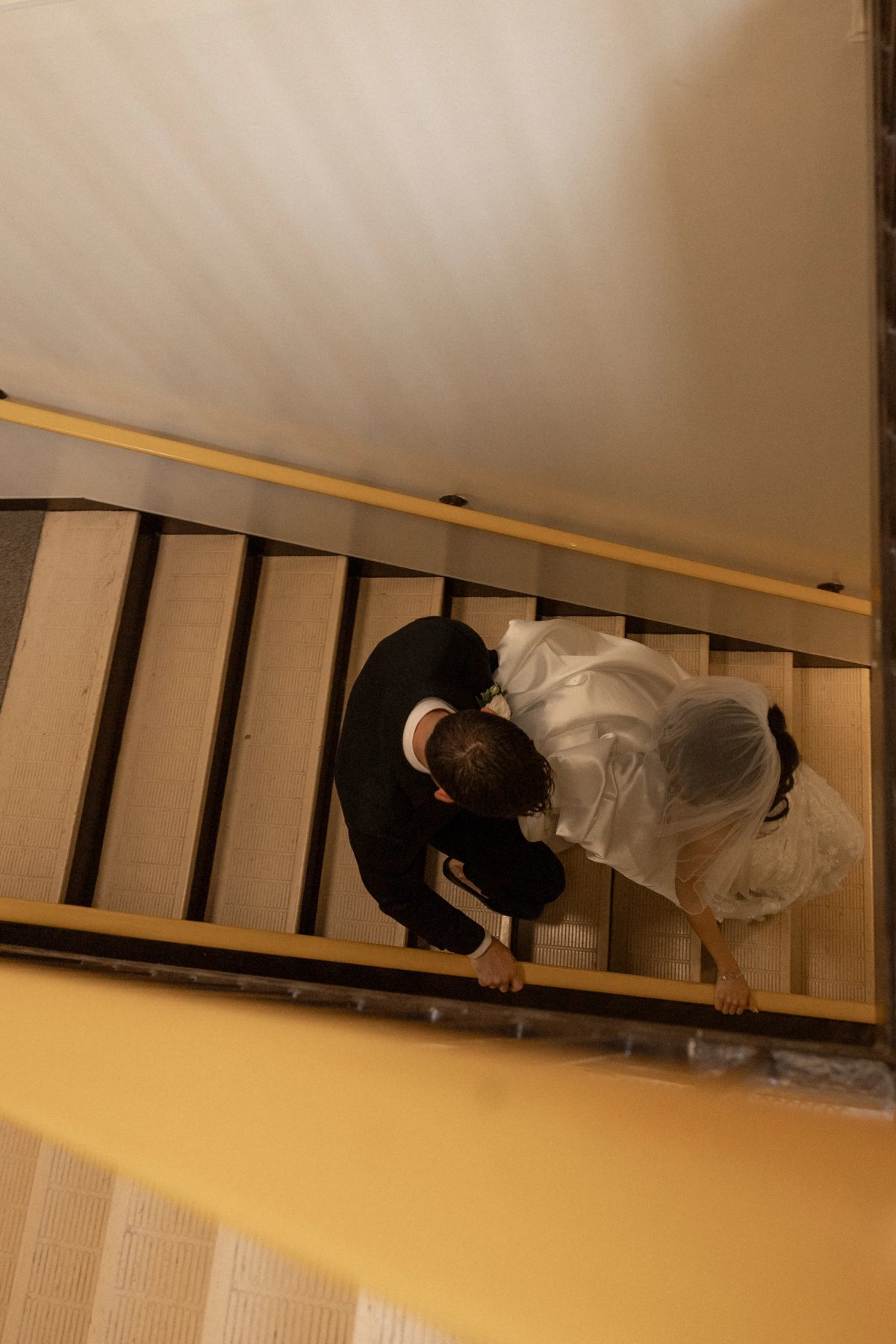
Because Catholic weddings with a Mass last about an hour and often start in the early afternoon, there is typically a gap between the ceremony and reception. Here are some suggestions for planning your timeline:
- Schedule family portraits before the ceremony – If your church forbids posed photos inside the sanctuary, plan to complete family portraits before the ceremony, possibly after a first look. Doing family portraits before the Mass can prevent you from having to chase people afterward.
- Leave time after the ceremony for portraits – Use the gap between the ceremony and reception to take bridal party and couple portraits at a nearby park or urban location. This is often called the “Catholic gap,” and it allows you to relax and take your time. However, this time we chose to attend the immediate reception after the ceremony and leave with an Irish goodbye to take some couples portraits.
- Share the schedule with guests – If there is a long break between the ceremony and reception, make sure your guests know the timeline. Offer suggestions for things to do in the area or provide refreshments in a parish hall.
- Confirm the reception start time – Many parishes cannot start weddings later than 1:00–2:00 PM because of evening confessions. Talk to your venue to coordinate the timing.
- Give yourself breathing room – Build in extra time for travel between the church and reception, as well as for a few quiet moments together after the ceremony. Often during weddings, unexpected things come up and planning ahead of time for those moments can ease any pressure.
Looking for a Catholic Wedding Photographer in Toronto or Southern Ontario?
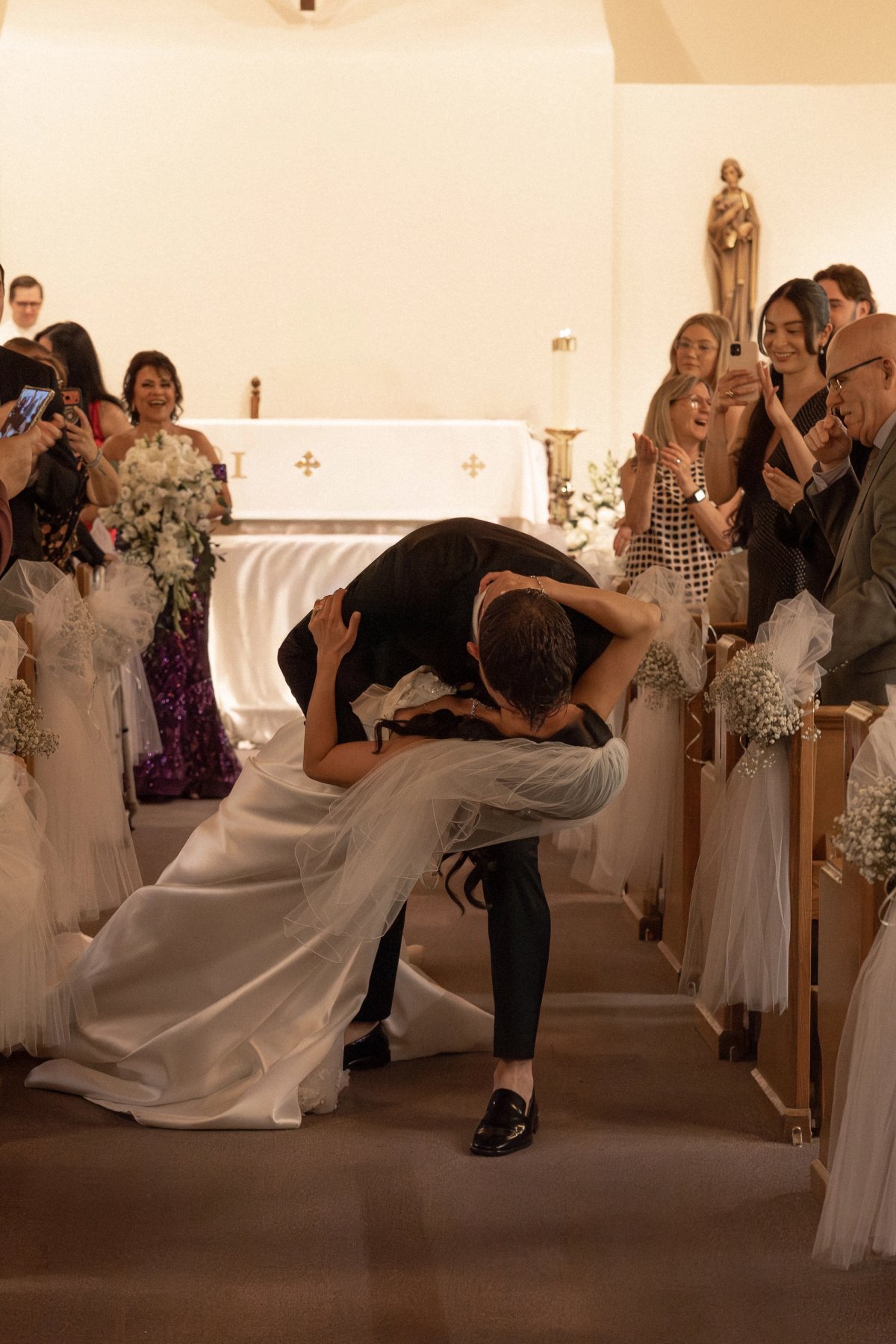
If you’re planning a Catholic wedding in Toronto, North York, or anywhere in Southern Ontario, I’d love to chat. As a Newmarket-based wedding photographer who specializes in documentary coverage, my goal is always to blend into the background, respect the sacredness of your ceremony, and tell the story of your day with honesty and care. I work throughout the GTA, York Region, Niagara and beyond. Get in touch through my website to check availability and discuss your plans. You can also explore my wedding photography portfolio and read more on my Ontario wedding photography blog. I’d be honoured to document your day.
Frequently Asked Questions
Can photographers take photos during a Catholic wedding ceremony?
Yes, but only at certain times. Many parishes allow photos during the entrance procession, exchange of rings, signing of the register and recessional. Photos can often be taken from the back of the church without flash at any time, but photographers are usually asked to remain still during kneeling or communion.
Are photographers allowed to use flash in a Catholic church?
Policies vary by parish. Some churches allow flash during the processional and recessional, while others forbid artificial lighting entirely. Always confirm with your priest in advance and follow the church’s rules.
Can wedding photographers move around during a Catholic Mass?
Movement is generally restricted to the side aisles and back of the church. Photographers should not enter the sanctuary and should limit movement during prayers and kneeling. Some churches ask photographers to remain in one spot; others allow quiet movement along the side aisles.
When should couples ask about Catholic church wedding photography rules?
As soon as you have a wedding date. Schedule a meeting with your priest or parish coordinator to discuss the ceremony and obtain the church’s photography guidelines. Share the guidelines with your photographer well in advance of the wedding.
Can family photos be taken inside the church after the ceremony?
It depends on the parish. Some churches allow quick group photos at the altar; others prohibit posed photos inside the church. If portraits are important to you, plan to do them elsewhere or before the ceremony.
Do Catholic wedding photography rules vary by parish?
Yes. There is no universal rule; each church sets its own policies. Some parishes are more lenient, while others have strict restrictions on movement, flash and posed photos. Always confirm with your specific parish.